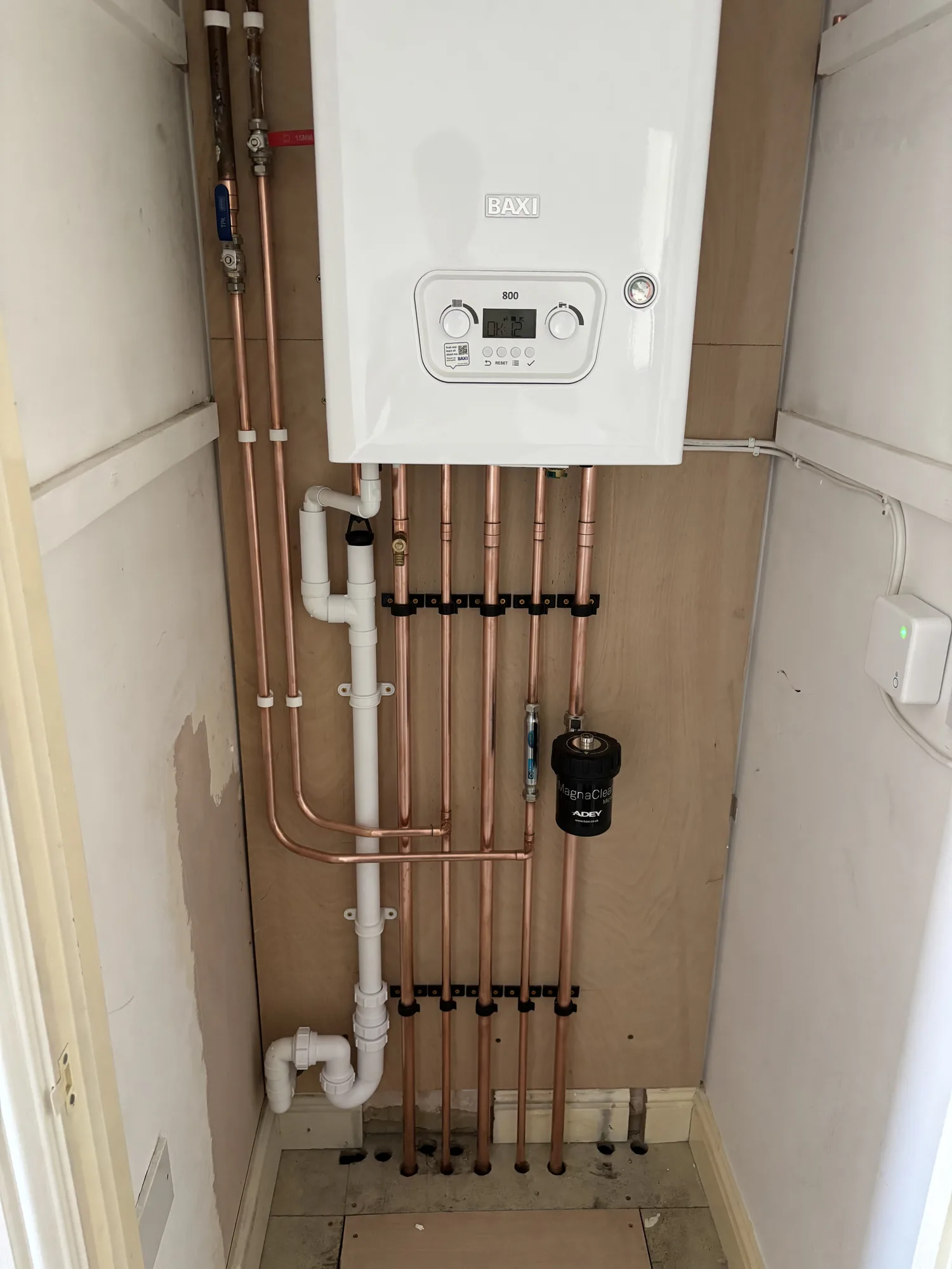
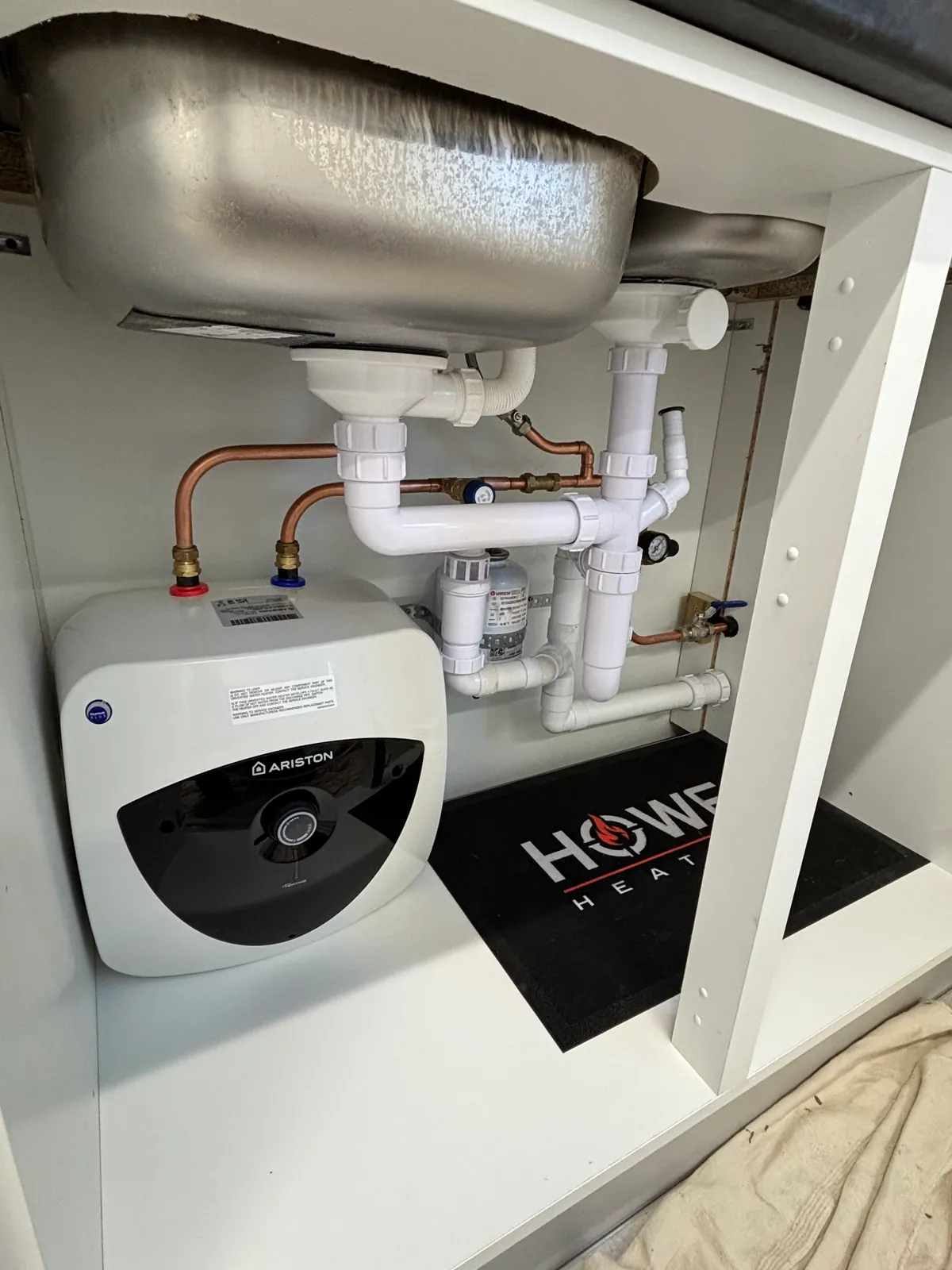
Common signs you may need a new boiler include rising energy bills, frequent repairs, the boiler being over ten to fifteen years old, radiators taking longer to heat up, and unusual noises or a yellow rather than blue flame. Planning a replacement before a breakdown is cheaper and far less stressful than an emergency in the middle of winter.
A boiler rarely dies without warning. More often it drops hints for months: bills creeping up, a radiator that takes an age to warm through, an odd noise from the cupboard. Spotting these signs early lets you plan a replacement in your own time rather than being caught out by a cold morning with no heating. Below are five of the most common signs that it might be time to think about a new boiler, written from a working Felixstowe engineer's point of view.
1. Your Energy Bills Keep Climbing
An ageing boiler gradually loses efficiency. Where a modern condensing boiler turns close to ninety pence in every pound of gas into useful heat, an older unit can waste a good chunk of that up the flue. If your heating bills are creeping up even though you are not using the heating any more than usual, the boiler is often the reason.
A new A-rated boiler will not make heating free, but the savings on running costs are real and they add up year after year. For a lot of homes, an inefficient old boiler is quietly costing more than people realise.
2. Frequent Repairs and Breakdowns
The odd repair over a boiler's life is normal. A pattern of them is not. If you are calling an engineer more than once a year, or you have started to dread the winter because you are never sure the heating will hold up, the repair bills are telling you something.
As a rule of thumb, once the cost of repairs starts approaching a meaningful share of a replacement, it usually makes more sense to put that money towards a new boiler with a fresh warranty rather than keep patching up an old one. Parts for older models also get harder to find over time, which can turn a quick fix into a long wait.
3. The Boiler Is Over 10 to 15 Years Old
Most boilers are designed to last somewhere between ten and fifteen years with regular servicing. Beyond that, efficiency drops, parts wear, and the risk of an inconvenient breakdown climbs. A boiler that is fifteen years or older is worth keeping a close eye on even if it still seems to be running fine.
If you are not sure how old your boiler is, the serial number on the front or the original paperwork will usually tell you. Older boilers also tend to be far less efficient than a modern condensing model, so age and running cost often go hand in hand.
Thinking About a New Boiler?
Call Howe Heating on 07393 998344 for free, honest advice and a clear quote on a new boiler across Felixstowe and Suffolk.
Call for a Free Quote4. Radiators Are Slow to Heat Up
If your radiators take much longer than they used to to warm through, or the house never quite feels as warm as it should, the boiler may be struggling. Cold spots at the bottom of radiators often point to sludge in the system, while a boiler that cannot hold a steady temperature may be losing its grip.
Some of this can be sorted with a system flush and a magnetic filter, which is why it is worth getting it looked at rather than assuming the worst. But if the boiler itself is past its best, slow and uneven heating is a common sign that it is on the way out.
5. Strange Noises or a Yellow Flame
Boilers should run fairly quietly. New or louder noises are worth paying attention to.
- Banging, whistling or gurgling: Often a sign of air, low pressure, or sludge in the system. Left alone it puts extra strain on the boiler.
- Kettling: A rumbling like a boiling kettle usually means limescale or debris has built up in the heat exchanger, making the boiler work harder than it should.
- Yellow or orange flame: A healthy gas flame burns crisp and blue. A lazy yellow or orange flame can be a sign of incomplete combustion and possible carbon monoxide. Turn the boiler off and call a Gas Safe engineer straight away.
Carbon monoxide is colourless and has no smell, so a working carbon monoxide alarm near your boiler is always a sensible precaution. If your alarm sounds or you feel unwell, ventilate the room, turn off the boiler, and call the gas emergency line on 0800 111 999.
Repair or Replace?
One sign on its own does not always mean you need a new boiler. A single repair, a one-off noise, or a radiator that needs bleeding can usually be sorted. It is when several of these signs show up together, especially on a boiler that is already over ten years old, that replacement starts to make more sense than repair.
The honest answer for your home depends on the boiler and the system around it. Joby is happy to take a look, tell you plainly whether a repair will do or whether a replacement is the better call, and give you a clear price either way. Planning a new boiler before the old one fails is always cheaper and far less stressful than an emergency in the middle of winter. New boiler installations with Howe Heating typically range from £2,500 to £4,000 supplied and fitted, including removing your old boiler and registering the manufacturer warranty.
Frequently Asked Questions
Most boilers last between ten and fifteen years with regular servicing. Beyond that, efficiency drops and the risk of breakdown climbs, so it is worth keeping an eye on an older boiler even if it still seems to be running well.
It depends on the boiler. A one-off repair on a fairly young, efficient boiler is usually worth it. Once a boiler is over ten years old and the repairs start adding up, a new boiler with a fresh warranty often works out cheaper in the long run. Joby will give you a straight answer for your situation.
A healthy gas flame should burn crisp and blue. A lazy yellow or orange flame can be a sign of incomplete combustion and possible carbon monoxide. Turn the boiler off, ventilate the room, and call a Gas Safe registered engineer before using it again.
A modern A-rated condensing boiler is far more efficient than an older unit, so most homes see lower running costs after an upgrade. It will not make heating free, but the savings are real and they add up year after year.
New boiler installations with Howe Heating typically range from £2,500 to £4,000 supplied and fitted. The exact price depends on the boiler you choose, the size and layout of your system, and any extra work needed. We give you a clear, fixed quote after surveying your home.
It is usually better not to. Replacing a boiler before it dies means you can plan the work, choose the right boiler, and avoid a cold snap with no heating. An emergency replacement in the middle of winter is more stressful and often more expensive.